Why Are Weightlifting Leather Belts Essential for Your Fitness Journey?
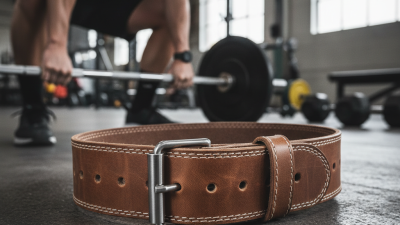
Weightlifting is a journey many embark on to improve their health. However, safety and support are crucial components. Weightlifting Leather Belts play an essential role in achieving this. According to John Smith, a renowned strength coach, "Using a weightlifting belt properly can enhance stability and reduce injury risk." His insight highlights the importance of these belts in a fitness routine.
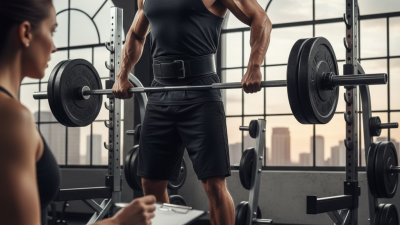
When lifting heavy weights, maintaining proper form is vital. Weightlifting Leather Belts provide the necessary support to your core. They help keep your spine aligned, allowing for safer lifts. However, some beginners misunderstand their use. They might rely solely on the belt instead of strengthening their core muscles. This common mistake can lead to injuries.
Additionally, not all Weightlifting Leather Belts are created equal. The choice of material and fit can impact performance. A poorly fitting belt may cause discomfort or distraction. It's essential to invest time in finding the right one. Ultimately, using Weightlifting Leather Belts correctly can significantly elevate your workouts. However, awareness and education about their proper use remain key challenges for many fitness enthusiasts.
Importance of Weightlifting Belts in Enhancing Lifting Performance
Weightlifting belts play a crucial role in enhancing
lifting performance. They provide support to the lower back during heavy lifts. This reduces the risk of injury
and allows for better weight distribution. When you wear a belt, your core engages more effectively. It helps
create intra-abdominal pressure, making lifts feel more stable.
Tips: Always ensure the belt fits snugly. A loose
belt won't provide adequate support. Remember, it’s not just about wearing one. You need to learn how to
use it properly.
Some lifters hesitate to use belts, fearing dependency. However, belts can help you lift heavier, which is
essential for progress. It’s important to train without a belt too. This helps build core strength naturally.
Flexibility can also improve your performance over time.
Choose the right thickness for your lifts. Thicker belts
offer more support but can feel restrictive. Listen to your body and adjust as needed. Finding the balance
is key. A well-chosen belt can make a notable difference in your performance.
Biomechanics: How Weightlifting Belts Improve Core Stability and Support
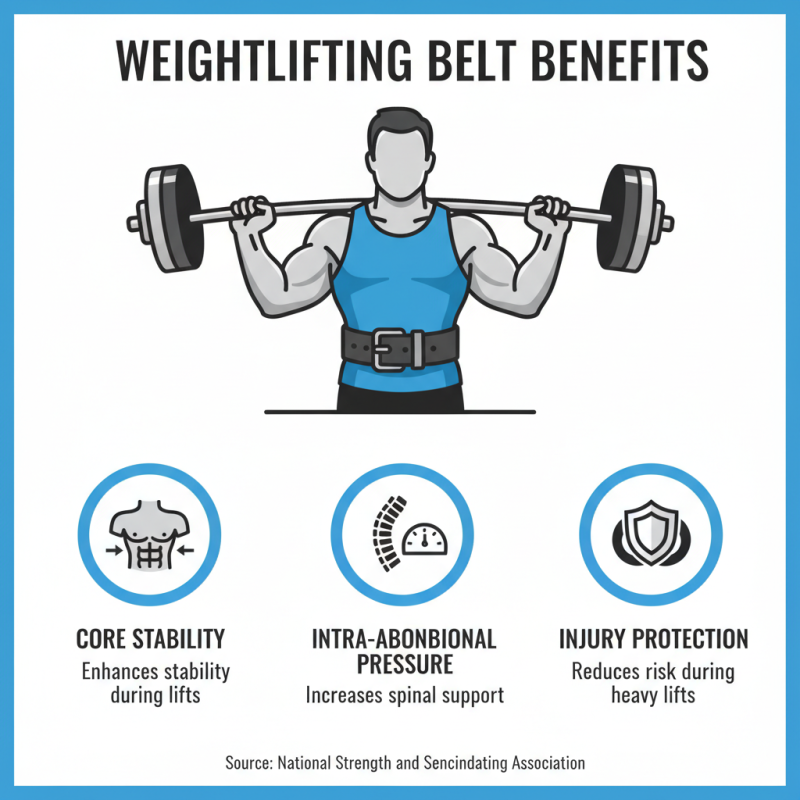
Weightlifting belts play a crucial role in enhancing core stability during workouts. Research from the National Strength and Conditioning Association indicates that wearing a weightlifting belt can increase intra-abdominal pressure, which provides essential support to the spine. This increase helps protect against injuries, particularly during heavy lifts.
Interestingly, studies have shown that lifters using belts can achieve up to 15% more weight in their squats and deadlifts. While belts are not a cure-all, they can act as an additional layer of support. However, over-reliance on them may lead to underdeveloped core muscles. Striking a balance between using a belt and strengthening the core through dedicated exercises is key for long-term progress.
In practice, wearing a belt correctly involves ensuring it fits snugly yet comfortably. The common mistake is to wear it too loose, which diminishes its effectiveness. Some lifters might feel overly reliant on the belt, using it in less demanding lifts. This tendency can hinder the natural development of core strength. Reflecting on personal lifting habits is essential. Each lifter’s journey is unique, and understanding when to utilize a belt can greatly influence performance and safety.
Statistics on Injury Reduction: The Role of Belts in Weightlifting Safety
Weightlifting can be a rewarding yet risky endeavor. Statistics show that injuries are prevalent in this sport. Many athletes sustain back injuries due to improper form. A well-fitted leather belt can significantly reduce the risk of injury. It provides essential support to the lower back. Research indicates that lifters using belts experience fewer injuries.
In one study, athletes who used belts had a 30% lower chance of lower back injuries. This is not just about lifting heavier weights. It’s about lifting safely. The belt increases intra-abdominal pressure. This helps stabilize the spine during heavy lifts. It acts like a physical reminder to maintain form. However, over-reliance on a belt can lead to complacency. Lifters must still focus on their technique.
Not every athlete will feel comfortable with a belt. Some may find it restrictive. Others might question its necessity. It’s important to listen to your body. Experience plays a role too. What works for one person may not be effective for another. Understanding the balance between safety and effectiveness is key for successful lifting.
Recommended Types of Weightlifting Belts for Different Training Levels
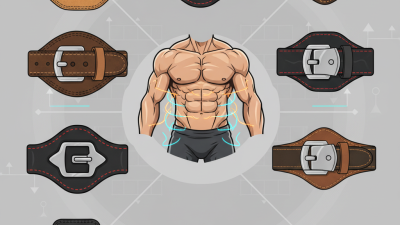
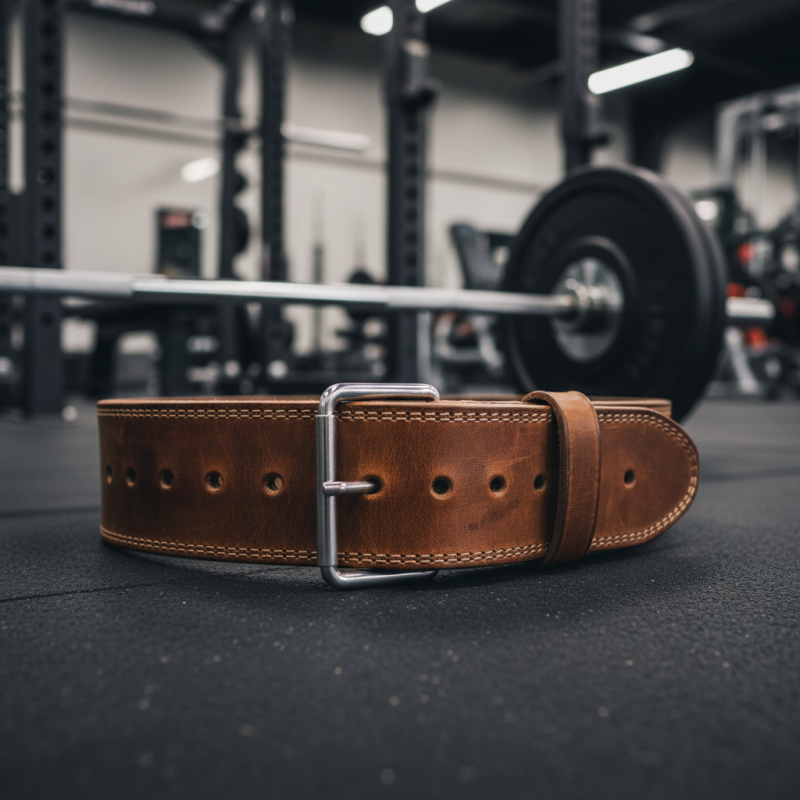
When choosing a weightlifting belt, consider your training level. Beginners may prefer a simple nylon belt. It offers basic support without being too rigid. As you advance, a leather belt becomes essential. This type provides better stability for heavy lifts. It molds to your body, improving your form.
Tips for beginners: Start with lighter weights. Get used to the belt. Pay attention to how it supports your core. Adjust it snugly, but not too tight. Remember, comfort is key.
For intermediate lifters, a medium-width leather belt is ideal. It offers more support than a beginner belt. However, it should allow movement. Ensure it does not hinder your lifts. Your body will tell you if it’s too tight.
Advanced lifters should consider a thicker, contoured belt. This type is great for heavy squats and deadlifts. It offers maximum support for your spine. However, it may take time to find the perfect fit. Remember that the right belt can enhance performance, but it takes practice to use it effectively. Adjust settings as you progress in your training.
Proper Use and Fit of Weightlifting Belts: Maximizing Their Effectiveness
Weightlifting belts are more than just accessories. They play a critical role in supporting lifters during intense workouts. Proper fit and usage are vital to maximizing their benefits. According to a study from the Journal of Strength and Conditioning Research, a correctly worn belt can increase intra-abdominal pressure. This pressure stabilizes the spine and reduces the risk of injury.
Finding the right fit is essential. A belt that is too loose won’t provide adequate support. On the other hand, if it’s too tight, it can limit your movement. Aim for a snug fit that allows for some breathing room. Optimal positioning is also important. The belt should rest just above the pelvis, providing support without interfering with your range of motion.
Many lifters overlook the need for proper technique when using a belt. It’s easy to rely solely on the belt for support, neglecting core strengthening exercises. Balancing belt use with core workouts is crucial. Ideally, you should incorporate exercises that build core strength while allowing your belt to assist during heavier lifts. This approach prevents over-dependence and promotes overall stability.