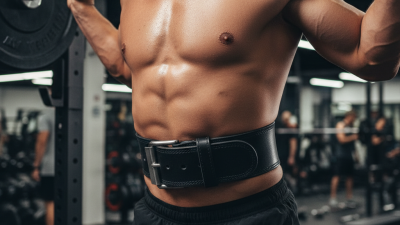
Choosing Weightlifters Belts for global buyers requires more than comparing prices, colors, and logo placement. The market is growing alongside renewed interest in resistance training. The American College of Sports Medicine ranked traditional strength training among the leading worldwide fitness trends in its 2024 Worldwide Survey of Fitness Trends. Meanwhile, Grand View Research reports continued expansion in the global sports equipment market, supported by commercial gyms, home training, and fitness participation. These figures do not isolate Weightlifters Belts. That limitation matters.
The market is not perfectly measured.
A reliable buying decision should connect user experience with technical verification. Buyers should examine belt width, thickness, leather or synthetic construction, buckle strength, stitching density, edge finishing, and adjustment range. A belt that feels rigid in a showroom may become uncomfortable during repeated squats. A narrow belt may suit Olympic lifting, while a wider support belt may appeal to powerlifting users. Product claims should be supported by material specifications, inspection records, load-test evidence, and consistent factory samples. The International Organization for Standardization emphasizes documented quality systems through ISO 9001, although certification alone does not prove product performance.
Global sourcing adds practical risks. Sizing must reflect regional body measurements, not assumptions. Packaging should protect buckles from scratches and moisture. Suppliers should explain traceability, defect handling, and replacement procedures in clear English. Buyers should also review destination-market labeling and consumer-safety requirements with qualified local advisers. No single report can answer every question. That is where careful sampling, hands-on testing, and transparent supplier communication become essential. A strong purchasing framework balances comfort, durability, evidence, and realistic user needs.
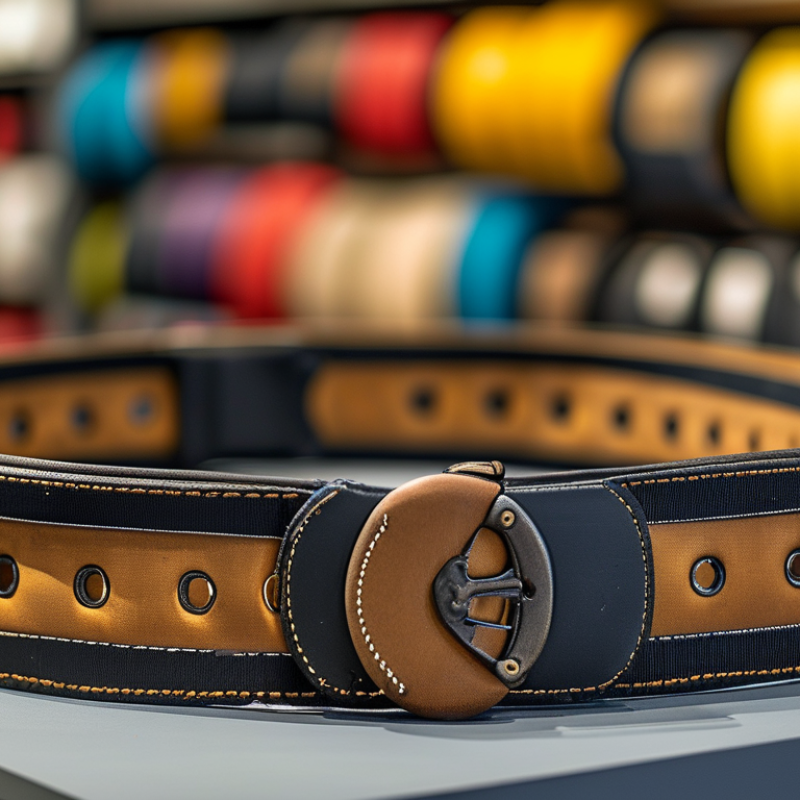
Global buyers should match belt material to training conditions, not only price. Leather offers firm support and compresses less during heavy squats. It also needs drying after humid sessions. Nylon feels lighter and bends more easily, which suits beginners, travel, and mixed workouts. However, its flexibility may feel unstable during maximal lifts.
The ACSM Worldwide Survey of Fitness Trends 2024 ranked traditional strength training fifth, showing continued demand for practical resistance-training equipment.
Thickness changes both comfort and support. A 10 mm belt is usually easier to break in and fits more body types. It is also the maximum thickness permitted under current International Powerlifting Federation technical rules. A 13 mm belt provides a stiffer abdominal surface, but it can press sharply into the ribs when seated or bracing incorrectly. It may not be competition legal. Check the governing body first.
Measure the waist where the belt will sit, then compare the supplier’s actual size chart. Do not rely on trouser size. A useful test is simple: you should brace firmly without holding your breath excessively. I have found that a rigid belt can expose poor positioning rather than fix it. That matters. Buyers should request leather grade, nylon weave, buckle material, stitching photographs, and thickness tolerance. Product listings often state “10 mm” without explaining whether this is average or maximum thickness. That detail deserves scrutiny.
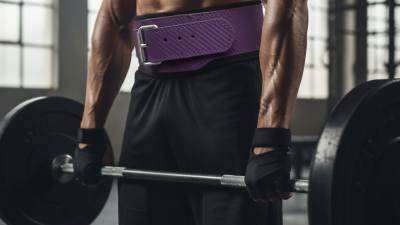
For global buyers, belt fit begins with the waist, not the clothing label. Measure the exact position where the belt will sit. Stand upright, breathe normally, and place a flexible tape around your torso. Do not pull it tight. Record the measurement after a relaxed exhale, then repeat it twice. Fit comes first.
A belt should feel firm across the abdomen and lower back. It should not pinch the ribs, slide toward the hips, or restrict controlled breathing. Leave enough room to brace evenly before a heavy lift. In coaching practice, I have seen athletes choose smaller belts because “tight” feels safer. That choice often creates pressure points. I still recheck measurements after meals or major bodyweight changes. Small differences matter.
The International Weightlifting Federation allows competition belts up to 12 centimeters wide, offering a useful reference for buyers, although training needs vary. The American College of Sports Medicine’s 2024 Worldwide Survey of Fitness Trends collected responses from more than 2,000 fitness professionals across multiple countries. Its continued focus on strength training reflects a broad, international user base. Research published in Medicine & Science in Sports & Exercise also indicates that belts can influence trunk mechanics and intra-abdominal pressure, so sizing should support technique rather than replace it. Buyers should compare their measured circumference with each supplier’s chart, check the measurement method, and request the tolerance range. Never guess.
Measure around the torso where the belt will sit, usually between the lowest rib and the top of the hip bone. Keep the tape level and snug without compressing the skin. The chart shows common waist-circumference bands and their midpoint measurements; always compare your measurement with the specific belt’s sizing guide before purchasing.
When choosing a weightlifting belt for global competition, start with width and rule compliance. A four-inch belt usually refers to its maximum vertical width, not every section. Some designs maintain four inches around the waist. Others taper toward the front or sides. Always check the current federation rulebook before ordering. Competition requirements can differ by organization and country.
From practical fitting experience, a wider belt supports the trunk well during squats and deadlifts. However, width alone does not guarantee comfort or stability. Measure your waist where the belt will sit, then compare that measurement with the supplier’s sizing chart. Measure twice. A belt that pinches the ribs may restrict breathing. A loose belt can shift during a heavy lift. Fit matters more.
Construction also affects competition use. Firm leather or approved synthetic materials usually provide predictable support. A secure buckle should close evenly and resist accidental release. Stitching must look uniform, with no exposed edges or weak corners. Check the belt’s thickness, fastening system, and visible logos before competition inspection. Some buyers focus only on the four-inch claim. That is an avoidable mistake. I have also found that extremely rigid belts need a longer break-in period, which can change the lifter’s setup. Test the belt during training, under controlled loads, and review the rules again before travel.
How to Choose Weightlifters Belts for Global Buyers?
Material, buckle design, and stitching decide whether a lifting belt survives repeated heavy loads. Textile Exchange’s 2024 Materials Market Report states that polyester represented about 57% of global fiber production in 2023. Polyester webbing offers strong abrasion resistance, but fiber content alone proves little. Ask for thickness, tensile-force results, and abrasion data. A stiff leather belt may resist compression well, while synthetic layers can dry faster after sweaty sessions. Neither option is automatically safer.
Buckle testing needs practical detail. Check whether the prong, roller, and holes remain aligned after repeated loading. ISO 13934-1 measures textile tensile force in newtons, and ASTM D5034 evaluates fabric breaking strength. These tests help assess webbing, not the complete belt. NIOSH’s Revised Lifting Equation uses a 23-kilogram load constant under ideal conditions. That figure is not a weightlifting rating, but it reminds buyers that real loading depends on posture, reach, and repetition. A belt can look solid, yet fail at the seam. I would not trust one clean laboratory result.
Tips: Inspect four stitching zones: buckle anchors, back-panel edges, adjustment holes, and the inner lining. Look for dense, even stitches without loose threads. Request photos after cyclic-load testing. Compare failure points, not only peak strength. Ask whether tests used wet, dry, and temperature-shifted samples. Small details matter. Suppliers should provide dated reports, sample identification, and test methods. Some reports still leave questions, so independent retesting is worth considering for large global orders.
| Test Sample | Main Material | Thickness / Width | Buckle Configuration | Stitching Construction | Static Load Test | Cyclic Load Test | Buckle Corrosion Test | Stitch Pull Strength | Evaluation |
|---|---|---|---|---|---|---|---|---|---|
| A | Full-grain cowhide leather | 10 mm / 100 mm | Single-prong, heat-treated steel buckle | Box-X pattern; bonded polyester thread; reinforced belt loop | 3,000 N; no tearing | 10,000 cycles at 1,500 N; pass | 96 h salt spray; light discoloration | 1,180 N | Excellent |
| B | Vegetable-tanned leather | 8 mm / 100 mm | Double-prong, plated steel buckle | Parallel rows with cross-stitch reinforcement | 2,700 N; no tearing | 8,000 cycles at 1,400 N; pass | 72 h salt spray; minor surface rust | 1,060 N | Very Good |
| C | Nylon webbing with EVA support core | 6 mm / 100 mm | Cam-lock roller buckle, zinc alloy | Bartack reinforcement at buckle and adjustment zones | 2,200 N; no webbing break | 12,000 cycles at 1,200 N; pass | 96 h salt spray; no functional effect | 920 N | Very Good |
| D | Nylon webbing with laminated foam padding | 5 mm / 100 mm | Hook-and-loop closure with steel D-ring | Double-row lockstitch; 35 mm reinforcement patch | 1,800 N; slight elongation | 6,000 cycles at 1,000 N; pass | 96 h salt spray; no visible rust | 760 N | Good for General Training |
| E | Split leather with synthetic backing | 7 mm / 100 mm | Single-prong, untreated carbon steel buckle | Single-row stitching with limited edge reinforcement | 2,100 N; edge deformation | 5,000 cycles at 1,200 N; pass | 48 h salt spray; visible rust spots | 820 N | Acceptable with Maintenance |
| F | Polyester webbing with neoprene padding | 4 mm / 100 mm | Plastic quick-release buckle with metal adjuster | Single-row lockstitch; no buckle-base bartack | 1,200 N; buckle distortion | 3,000 cycles at 800 N; failed at cycle 2,640 | Not applicable to plastic buckle | 540 N | Not Recommended for Heavy Loads |
How to Choose Weightlifters Belts for Global Buyers?
Global buyers should treat certification claims carefully. Weightlifting belts may not have one universal product certificate. Ask suppliers for factory quality records, material test reports, and buckle strength results. ISO 9001 can support production consistency, but it does not prove every belt is safe. Check chemical declarations for coatings, dyes, adhesives, and synthetic materials. For leather belts, confirm the material’s origin and required treatment documents. Requirements differ by destination.
Sizing systems often cause avoidable returns. Measure the waist where the belt will sit, not the trouser size. Request measurements in both centimeters and inches. Review the usable adjustment range, hole spacing, belt width, and thickness. A wide powerlifting belt may feel restrictive during dynamic training. Fit matters more. Ask for a physical sample when large orders are involved. Product photos can hide stiff edges or weak stitching.
Cost calculations should include tooling, samples, packaging, freight, customs duty, taxes, inspection, and possible storage fees. The lowest factory price may create the highest landed cost. Confirm the correct customs classification with a licensed broker before shipment. Check origin marking, commercial invoices, packing lists, and destination labeling rules. Some countries also request importer details or material declarations. Keep records. I have seen buyers overlook packaging measurements, then pay for unexpected freight volume. A written specification sheet reduces that risk, although it cannot replace independent inspection.