Leave Your Message

What Is a Fitness Belt and How Does It Work?

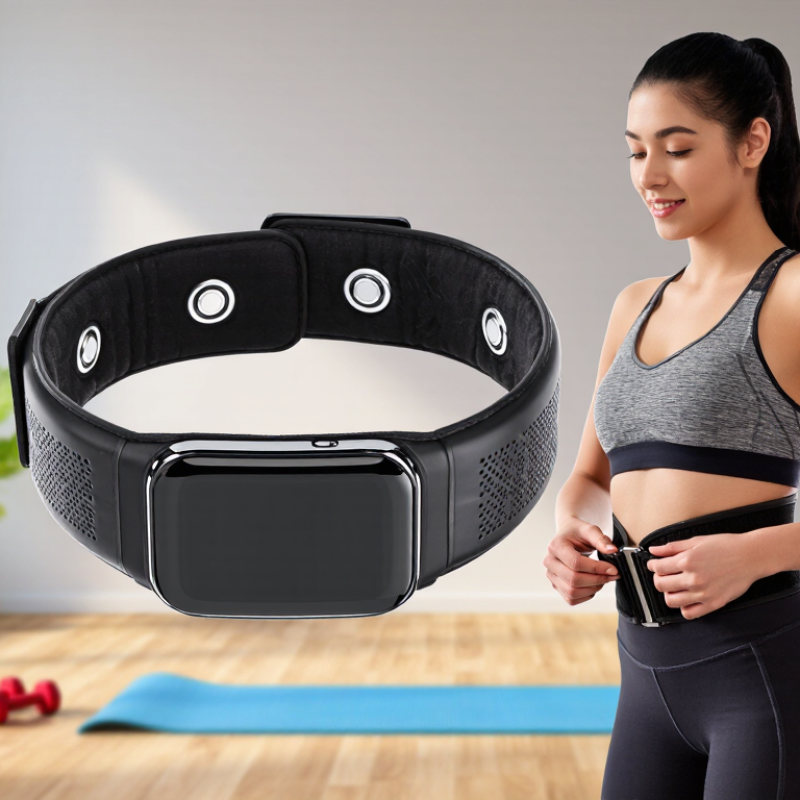
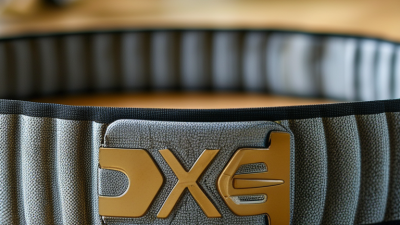
A Fitness Belt is a wearable device designed to support movement, measure activity, or provide targeted feedback around the waist. However, the name does not describe one single product. Some belts track steps, posture, breathing, or workout intensity. Others provide abdominal support during lifting, while certain models use gentle electrical stimulation. Understanding the design matters before judging its benefits.

Most Fitness Belt models work through sensors, pressure, or controlled signals. A smart belt may detect movement through accelerometers and send data to a phone. A lifting belt increases abdominal pressure when tightened correctly, helping the torso feel more stable under load. An electrical model sends small impulses through skin electrodes. These impulses may cause muscle contractions, but they do not automatically replace exercise or improve fitness.

Fit changes everything. A belt should feel secure, not painfully tight. During a walk, the device should remain in place without rubbing the skin. Sweat can affect comfort and sensor performance. I would check the manual, clean the contact areas, and monitor unusual discomfort. Small details matter.

Evidence also requires caution. Marketing often sounds more certain than research supports. A belt may assist training, but it cannot compensate for poor technique, limited sleep, or an unbalanced diet. People with medical conditions, implanted electronic devices, pregnancy, or unexplained pain should seek professional advice before using specialized models. The most reliable approach is practical: understand the mechanism, use the belt as directed, and judge results through consistent habits rather than dramatic promises.
What Is a Fitness Belt and How Does It Work?

Defining a Fitness Belt: Tracker, Support Belt, or EMS Device

What Is a Fitness Belt and How Does It Work?

A fitness belt can mean three different tools: a tracker, a support belt, or an EMS device. The label is still messy. A tracker uses motion sensors and sometimes optical heart-rate sensing. It estimates steps, activity time, and calorie expenditure. These estimates are useful, but not laboratory measurements.

The American College of Sports Medicine’s Worldwide Survey of Fitness Trends 2025 ranked wearable technology as the leading fitness trend. That reflects demand, not perfect accuracy.

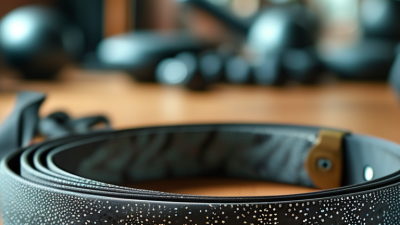
A support belt wraps around the waist and increases external pressure. It may help you feel steadier during lifting or remind you to brace your trunk. It does not automatically strengthen abdominal muscles.

A belt worn too tightly can restrict breathing and hide poor lifting technique. That limitation deserves more attention.

An EMS belt sends mild electrical impulses through skin electrodes, causing selected muscles to contract. It can create a strong tingling sensation, but it is not a shortcut to fat loss.

The U.S. Food and Drug Administration warns that EMS devices should not replace regular exercise and may cause skin irritation or other injuries when misused.

The 2024 World Health Organization status report on physical activity also highlights a wider problem: about 31% of adults worldwide remain insufficiently active.

A belt may support better habits, but it cannot perform the habits for you. Check the device instructions, fit, contraindications, and claimed evidence before use.
How Motion Sensors Track Activity: WHO’s 150–300-Minute Weekly Benchmark

What Is a Fitness Belt and How Does It Work?

A fitness belt is a wearable device that records body movement during daily activities. It usually contains an accelerometer and sometimes a gyroscope. These motion sensors detect changes in speed, direction, and body position. During a brisk walk, the sensor notices repeated hip movement and estimates steps or active minutes. In practical use, loose clothing can reduce accuracy. Small movements may also be counted as exercise. The numbers are useful, but they are not perfect measurements.

The World Health Organization recommends 150–300 minutes of moderate activity each week for adults. Vigorous activity can replace some of that time. A sensor estimates intensity through movement patterns, pace, and sometimes heart-rate data. It does not directly understand effort, tiredness, or uneven ground. A slow hill climb may feel harder than the belt reports. That is an important limitation. Compare the readings with your breathing, pace, and personal experience.

Tips: Wear the belt firmly, without making it uncomfortable. Keep its position consistent during walks. Check your weekly minutes, not only one busy day. Record activities the sensor may miss, such as cycling or strength training. Recalibrate when instructions allow. If the data seems strange, test it against a timed walk. The device can guide habits, but it should not replace professional medical advice.

What Is a Fitness Belt and How Does It Work? - How Motion Sensors Track Activity: WHO’s 150–300-Minute Weekly Benchmark

Data Dimension What the Fitness Belt Measures How It Works Typical Data Output Important Interpretation
Motion detection Changes in body movement, direction, and acceleration A three-axis accelerometer detects movement along forward-backward, side-to-side, and up-down directions. A gyroscope may add information about rotation. Movement counts, activity duration, movement patterns, and exercise recognition Motion data is an estimate of activity, not a direct measurement of fitness or health.
Step counting Repeated walking or running patterns Algorithms identify recurring acceleration peaks and timing patterns that resemble steps. Daily step total, walking time, and distance estimate Pushing a stroller, carrying objects, unusual gait, or loose placement can reduce accuracy.
Activity intensity The relative effort associated with movement Acceleration patterns, movement frequency, duration, and sometimes heart-rate data are combined to classify activity intensity. Light, moderate, or vigorous activity minutes Intensity depends on individual fitness, age, health status, and the activity being performed.
Heart-rate monitoring Pulse rate during rest and movement An optical sensor estimates blood-volume changes beneath the skin using reflected light. Some belt designs may use electrical signals instead. Beats per minute, resting heart rate, and heart-rate zones Fit, skin contact, movement, temperature, and skin characteristics can affect readings.
Active minutes Time spent moving at an intensity above ordinary daily activity Software evaluates motion intensity over time and adds minutes that meet its activity threshold. Minutes per day and minutes per week Different devices use different thresholds, so active-minute totals are not always directly comparable.
Moderate-intensity benchmark Weekly moderate aerobic activity Weekly activity totals can be compared with the World Health Organization recommendation for adults. 150–300 minutes per week Examples include brisk walking, cycling at a comfortable effort, and water-based exercise.
Vigorous-intensity benchmark Weekly vigorous aerobic activity Higher movement intensity and, when available, heart-rate data are used to estimate vigorous activity time. 75–150 minutes per week Examples include running, fast uphill walking, and sustained high-effort cycling.
Mixed-intensity equivalence A combination of moderate and vigorous activity A common comparison method treats one minute of vigorous activity as approximately two minutes of moderate activity. At least 150 minutes of equivalent moderate activity per week This is a guideline-based comparison, not a precise measure of calories or personal training benefit.
Muscle-strengthening activity Resistance-based exercise involving major muscle groups Motion sensors may recognize some exercise patterns, but they cannot reliably determine resistance, repetitions, or muscle load in every exercise. Exercise sessions or manually recorded strength-training time Adults are generally advised to perform muscle-strengthening activities on at least 2 days per week.
Energy expenditure Estimated calories used during activity Algorithms combine movement, duration, body characteristics, and sometimes heart rate to produce an estimate. Active calories and total daily energy estimate Energy estimates can have substantial error and should not be treated as exact measurements.
Inactive time Extended periods with little or no detected movement The device identifies long low-motion periods and may provide reminders to stand or move. Sedentary duration, inactivity periods, and movement reminders Sitting still is not the same as sleeping, and device classifications may be imperfect.
Data quality factors Conditions that influence measurement accuracy Placement, fit, battery level, movement type, sensor contact, software settings, and missing wear time affect the recorded data. More complete and consistent daily records Use trends over several days or weeks rather than relying on a single reading.
Reference point: The World Health Organization’s adult physical-activity guidance recommends 150–300 minutes of moderate-intensity aerobic activity or 75–150 minutes of vigorous-intensity activity per week, plus muscle-strengthening activities on at least 2 days per week.

How EMS Belts Stimulate Muscles: FDA Clearance Does Not Prove Fat Loss

A fitness belt is a wearable device placed around the waist or another muscle group. Many models use electrical muscle stimulation, or EMS. Small electrodes send controlled pulses through the skin. These pulses trigger involuntary muscle contractions. The sensation may feel like tingling, tapping, or repeated tightening.

The muscle moves. However, movement does not automatically mean fat loss. EMS can make a muscle contract, but it usually does not replace active exercise. Fat reduction depends on sustained energy balance, nutrition, sleep, and regular physical activity. A belt may support muscle engagement, yet its visible effect can remain modest. That distinction is easy to miss.

FDA clearance deserves careful interpretation. Clearance generally indicates that a specific device meets requirements for its stated use. It does not prove that the belt melts abdominal fat or produces meaningful weight loss. It also does not guarantee identical results for every user. The label can sound stronger than the evidence. Clinical research should examine the exact device, treatment schedule, and measured outcomes, not just the regulatory wording.

A cautious user should check the instructions and speak with a qualified healthcare professional when medical conditions are present. Skin irritation, discomfort, or excessive muscle soreness can occur. Never place electrodes over damaged skin or use settings that cause sharp pain. I would treat EMS as a limited training aid, not a shortcut. That view may feel less exciting, but it is more honest.

How Support Belts Affect Lifting: NIOSH’s 51-Pound Ideal-Condition RWL Model

A fitness belt is a supportive band worn around the waist during lifting. It may increase awareness of trunk position and provide a firmer feeling around the abdomen. However, it does not make a heavy load lighter or automatically protect the spine. The belt is equipment, not permission to lift carelessly.

NIOSH’s Revised Lifting Equation begins with a 51-pound Load Constant under ideal conditions. The worker uses both hands, keeps the load close, maintains a stable stance, and lifts with limited twisting. The task also assumes suitable hand contact and moderate lifting frequency. These conditions rarely remain perfect in a busy gym or workplace. Distance from the body, lifting height, rotation, repetition, and poor grip reduce the Recommended Weight Limit through specific multipliers. A support belt does not improve those values.

This matters at the rack.

A person may feel more secure while wearing a belt and unconsciously add weight. That response can defeat the belt’s practical benefit. In my experience, the belt feels most useful as a posture reminder during controlled sets, not as a substitute for bracing practice or load management. Evidence on injury prevention remains limited and should be interpreted carefully. NIOSH’s model evaluates the lifting task, not the belt. Better choices include reducing reach distance, raising awkward loads, improving handles, and allowing recovery time. I have also caught myself focusing on belt tightness while ignoring rushed technique. That is an uncomfortable but useful correction.

How to Use One Safely: ACSM Recommends Strength Training 2+ Days Weekly

A fitness belt can mean a wearable resistance belt or an electronic muscle-stimulation device. Its purpose varies, so read the instructions carefully. A resistance belt adds tension during movements such as squats, step-ups, or band walks. An electronic belt may create mild muscle contractions, but it cannot replace progressive resistance training. The ACSM’s Guidelines for Exercise Testing and Prescription recommends training all major muscle groups at least two days weekly.

Start with short sessions and low resistance. The belt should feel secure, not restrictive. You should breathe normally and keep your spine neutral. During a squat, your knees should track toward your toes, while the belt stays flat against your clothing. Stop if you feel sharp pain, numbness, dizziness, or unusual skin irritation. More pressure is not better.

Frequency matters more than dramatic sensations. The World Health Organization’s 2020 physical activity guidelines also recommend muscle-strengthening activities on two or more days each week. Use rest between hard sessions, especially when soreness changes your movement. A simple plan might include two weekly workouts, with eight to twelve controlled repetitions per exercise. That range is common, but not universal. Some users rush. That is the weak point. Consult a qualified health professional before use if you have a medical condition, recent injury, implanted electronic device, or unexplained pain. A belt can support consistency, but technique still decides whether the movement helps.

What Is a Fitness Belt and How Does It Work?

A fitness belt can provide external support and feedback during loaded exercises, but it does not replace proper technique, core control, or gradual progression.

How to use one safely: Choose a properly fitting belt, wear it snugly rather than painfully tight, maintain neutral posture, and keep breathing instead of holding your breath longer than necessary. Stop if you experience pain, numbness, or difficulty breathing.

Training context: ACSM progression models commonly describe approximately 2–3 weekly strength-training days for beginners, 3–4 for intermediate trainees, and 4–6 for advanced trainees. For most adults, strength training on at least 2 days per week is a practical minimum.