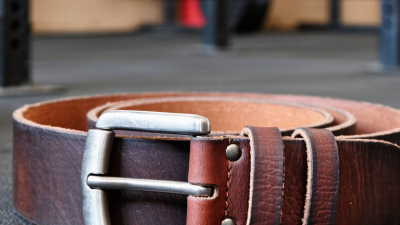
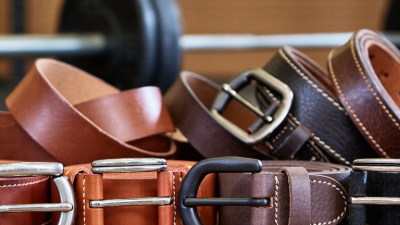
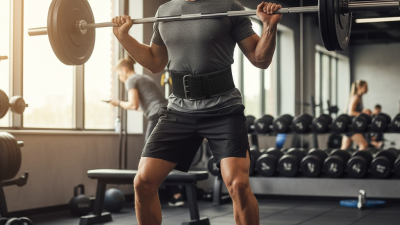
Global buyers are paying closer attention to training safety, product durability, and measurable value. Weightlifting Leather Belts now sit within a growing strength-equipment market, not merely a traditional gym accessory.
Grand View Research valued the global fitness equipment market at approximately USD 16.5 billion in 2023. Its report also projects continued growth through 2030. The Health & Fitness Association’s global industry research shows expanding participation across commercial gyms, private studios, and home training. These figures suggest stronger international demand. They do not guarantee quality.
A belt can look premium.
This is where buyer judgment matters. Dr. Stuart McGill, a leading spine biomechanics researcher, has repeatedly emphasized: “A belt is not a substitute for good lifting technique.” His point remains practical. A firm leather belt should support bracing, not hide poor movement or incorrect sizing. Buyers should examine leather thickness, stitching density, buckle strength, edge finishing, and moisture resistance. A rigid belt may feel secure during squats, yet uncomfortable during deadlifts. A softer belt may move naturally, but provide less consistent support.
The International Organization for Standardization provides useful quality principles, although it does not certify every weightlifting belt. Therefore, product claims require careful verification. Ask for material specifications, testing details, size charts, and clear warranty terms. Photographs can mislead. Stitching can fail quietly.
These seven tips for global buyers examine practical selection details, supplier reliability, user fit, and long-term performance. Some recommendations may seem obvious. They are still often missed.
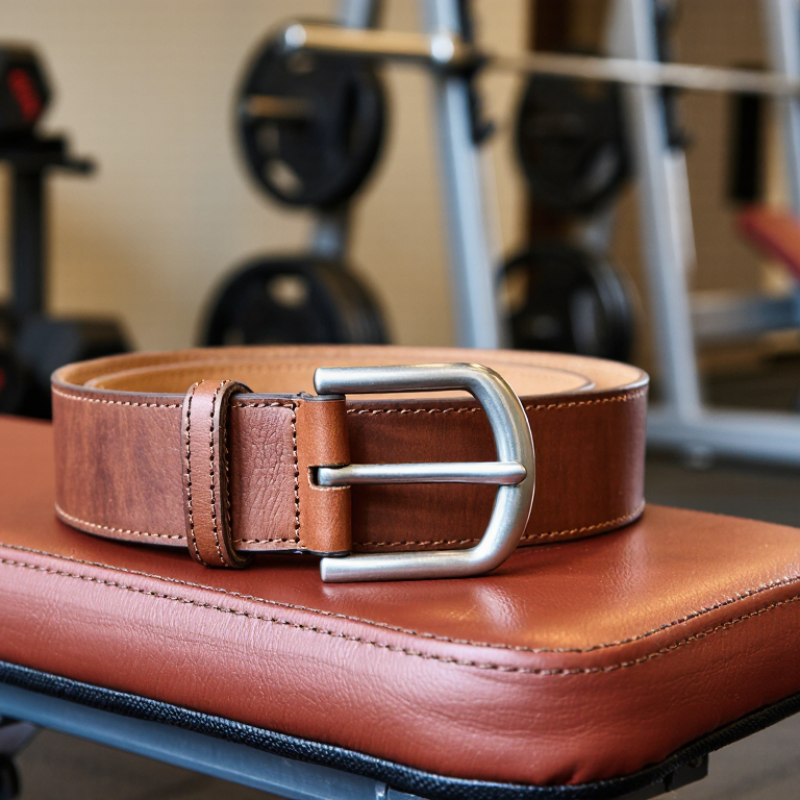
A suitable leather belt should match your training style, body shape, and lifting goals. In my fitting experience, a belt that feels strong can still restrict breathing.
Tip 1: Measure your waist where the belt will sit, not where trousers usually rest.
Tip 2: Choose firm, layered leather for heavy squats and deadlifts. Softer leather may feel comfortable, but it can lose support sooner.
Tip 3: Check the belt width. A wider design offers more trunk coverage, while a narrower shape may suit shorter torsos.
Fit matters more than appearance. The belt should feel secure without pressing sharply into your ribs.
Tip 4: Test several breathing positions before buying. Brace, bend, and sit briefly. If the edge digs into your skin, reconsider the shape.
Tip 5: Select a dependable buckle and reinforced holes. Small hardware details often decide long-term usability.
I once preferred a very rigid belt, then found it awkward during repeated training sets. That experience changed my view.
Tip 6: Match thickness to your actual strength level and technique. Extra thickness is not automatically better.
Tip 7: Inspect stitching, leather edges, and buckle alignment before regular use.
Look closely. For international buyers, confirm sizing units, return terms, and care instructions with the seller.
Leather can dry, crack, or absorb sweat when neglected. Wipe it after training and store it away from heat.
A practical belt may look less impressive, yet fit your movement more reliably.
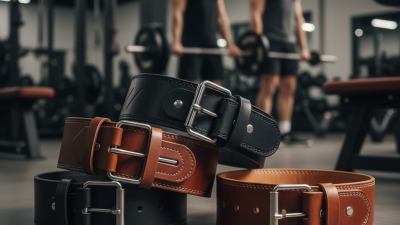
Leather quality controls comfort, durability, and load stability. Full-grain leather usually keeps its natural fiber structure. Correctly finished split leather can perform well, but quality varies more. Check the hide surface, fiber density, and tanning consistency. Avoid belts with plastic-like coatings hiding loose grain. A strong smell is not proof of quality. It may indicate unfinished processing.
Tip 1: Request leather origin and grade records.
Tip 2: Measure thickness at several points. Many lifting belts use 10–13 mm leather, but thicker is not automatically better.
Tip 3: Inspect the edges for smooth, even finishing.
Tip 4: Look for consistent density without soft patches.
ISO 2419:2012 specifies controlled conditioning at 23 ± 2°C and 50 ± 5% relative humidity. Buyers should compare test results under similar conditions.
Construction decides how the belt handles repeated bending.
Tip 5: Check whether stitching passes through both leather layers. Tight, even stitches are safer than decorative stitching.
Tip 6: Examine buckle holes for clean cuts and reinforced spacing.
Tip 7: Test buckle alignment under moderate tension.
ASTM D2209 evaluates leather tensile strength, but tensile data alone cannot predict comfort or long-term shape retention. In practical inspections, I have seen thick belts fail at weak holes. That detail is easy to miss.
Specify leather thickness, stitch count, hole spacing, edge treatment, and conditioning methods in purchase documents. Leave room for improvement. Supplier samples can still differ from bulk production.
ACSM’s Worldwide Survey of Fitness Trends 2024 ranked traditional strength training fifth among more than 2,000 surveyed professionals. That demand makes belt selection important. Measure your waist where the belt will sit, not where trousers usually rest. Choose the correct width for your torso and lifting style. A six-inch belt may feel stable, but it can press the ribs on shorter athletes. A narrower model may allow better squatting comfort.
Allow only slight overlap around the abdomen. The belt should feel firm, not painful. Too loose fails. Too tight restricts breathing. Check the manufacturer’s size chart, then measure twice; my own fitting mistake came from trusting an old waist measurement. Keep the belt centered above the hip bones. Do not place it directly across the lower ribs.
Select a closure that matches your adjustment needs. A prong closure offers simple, visible settings and works well for shared training spaces. A lever closure gives consistent tension, but small size changes may require tools. A hook-and-loop closure adjusts quickly and suits frequent warm-up changes, though repeated pulling can reduce holding strength. Test the closure during unloaded bracing first. Then use light sets before heavy work. WHO guidelines recommend muscle-strengthening activity on at least two days weekly, so comfort across repeated sessions matters. Inspect stitching, holes, and the fastening surface regularly. Replace damaged parts promptly.
| Tip | Buying Dimension | Practical Recommendation | Useful Specification Guide | What Global Buyers Should Check |
|---|---|---|---|---|
| 01 |
Width Select the correct support profile |
Choose a wider belt when the main goal is trunk support during heavy squats, deadlifts, and other strength-focused lifts. Choose a narrower or tapered profile when hip and rib clearance is more important. | Common leather belt widths include approximately 4 in (10 cm), 5 in (12.7 cm), and 6 in (15.2 cm). A 4 in width is a practical general-purpose option; 6 in provides a larger support area but may feel restrictive for some users. | Confirm the width at the front, back, and side panels. For tapered belts, request a dimensional drawing instead of relying only on the listed maximum width. |
| 02 |
Size Measure the actual wearing position |
Measure the waist where the belt will sit while lifting, not the location of regular trousers. Keep the tape snug without pulling it tightly into the body. | A size chart should show the usable hole range, not only the total belt length. The recommended fit normally places the wearer near the middle of the adjustment range, leaving room for normal clothing changes. | Ask for minimum and maximum hole-to-buckle measurements, hole spacing, belt-end length, and measurement tolerance. Do not select a size from waist circumference alone if the supplier uses a different measuring method. |
| 03 |
Closure Match the fastening system to use |
A single-prong closure is simple and familiar. A double-prong closure can distribute load across two contact points. A lever closure allows quick operation but requires accurate initial installation and compatible replacement hardware. | Prong belts use fixed holes and provide incremental adjustment. Lever belts use a lever and receiving bracket; their adjustment range depends on the mounting-hole pattern. Closure hardware should be corrosion-resistant and securely riveted or bolted. | Verify whether the closure is supplied assembled, whether the lever is reversible, whether replacement parts are available, and whether the fastening holes are compatible with the stated waist range. |
| 04 |
Leather Check construction and consistency |
Full-grain or top-grain leather can provide a firm, durable structure when properly constructed. Multi-layer leather may offer controlled stiffness and consistent thickness when the layers are bonded and stitched correctly. | Important details include leather type, total thickness, number of layers, edge finishing, stitching pattern, and reinforcement around the buckle area. Thickness should be specified in millimetres and measured consistently. | Request cross-section photos, material specifications, edge-finish samples, and a production tolerance. Avoid evaluating leather quality from color or surface gloss alone. |
| 05 |
Stiffness Balance support and comfort |
A very rigid belt may provide strong bracing feedback but can require a longer break-in period. A moderately firm belt is often easier to wear across different exercises and body types. | Stiffness is affected by leather type, thickness, layering, width, moisture, edge construction, and break-in. There is no universal consumer rating, so stiffness claims should be supported by a defined test method or physical sample. | Compare samples under the same conditions and inspect whether the belt bends evenly. Check for permanent creasing, delamination, loose stitching, or excessive edge pressure after repeated flexing. |
| 06 |
Comfort Consider body shape and movement |
A straight belt offers a consistent width around the torso. A contoured or tapered design can improve clearance near the ribs and hips, especially for users with a shorter torso. | Review front width, back width, taper angle, edge radius, padding, and the distance between the buckle and the nearest belt edge. A smooth, rounded edge generally reduces pressure points. | Request front, side, and rear measurements. Test the belt in a squat, deadlift setup, and seated position to check whether it digs into the ribs, hip bones, or abdomen. |
| 07 |
Quality & Compliance Prepare for international purchasing |
Define a written inspection standard covering dimensions, hardware, stitching, surface finish, odor, packaging, and closure function before placing a bulk order. | A practical inspection plan may include size measurement, width and thickness checks, buckle or lever function, hole alignment, stitch security, surface defects, packaging strength, and carton labeling. | Confirm the target market's requirements for leather labeling, restricted substances, packaging marks, barcode format, country-of-origin information, and documentation. Requirements vary by destination and product composition. |
Safety should lead every purchasing decision. ISO 20957-1 addresses safety for stationary training equipment, but it does not certify every standalone lifting belt. Ask suppliers for leather composition, buckle-load results, stitching tests, and chemical compliance documents. A glossy certificate is not enough. I would verify the issuing laboratory, test date, and tested model. The Global Wellness Institute reported that the wellness economy reached $6.3 trillion in 2023, increasing pressure on suppliers to prove product quality rather than make vague claims.
Customization affects both comfort and risk. Confirm belt width, leather thickness, hole spacing, buckle design, edge finishing, and logo placement before production. Request a physical sample. Measure it yourself. In practical inspections, uneven holes and rough edges often reveal weak process control. Suppliers should explain how they handle size tolerances, replacement parts, and packaging damage. Small details matter.
Reliability needs evidence. Review production records, inspection photos, material traceability, and independent test reports. Ask whether the same specifications apply to every shipment. A supplier may pass one sample and still vary later. That possibility deserves attention. The 2024 McKinsey wellness research estimated the global wellness market at about $1.8 trillion, showing strong demand but also intense competition. Choose partners willing to document failures, correct defects, and communicate clearly when specifications change.
Global buyers should compare the full cost of a weightlifting leather belt, not only its factory price. I have seen low quotations become expensive after packaging, inspection, insurance, and import charges. Request a detailed pro forma invoice. Check leather grade, thickness, buckle type, carton size, and minimum order quantity. A heavier belt may cost more to ship, especially by air. It may also last longer.
Tip 1: Compare landed costs. Ask suppliers to quote the product, export packing, freight, and insurance separately. Then compare shipping terms such as EXW, FOB, CIF, or DDP. These terms change who manages transport, customs, and local delivery. DDP can simplify purchasing, but verify what duties and taxes are included. Never assume “delivered” means every charge is covered.
Tip 2: Confirm shipping details in writing. Check production time, port of departure, tracking options, and responsibility for damaged cartons. Sea freight usually reduces unit cost for bulk orders, but delays can affect seasonal sales. Air freight is faster, yet its price can rise sharply with dimensional weight. I once underestimated carton volume; the mistake was small, but the surcharge was not.
Tip 3: Plan maintenance before ordering. Store the belt flat in a dry, ventilated place. Wipe sweat away after training, then let the leather dry naturally. Use a suitable leather conditioner sparingly. Too much moisture can soften the belt and weaken its shape. Inspect stitching, holes, and buckle screws monthly. Replace damaged hardware promptly, even if the belt still looks usable.
Three-year planning comparison of belt cost, shipping, and maintenance by leather thickness
The figures are indicative buyer-planning estimates in USD per belt. Product cost covers a full-grain leather belt, shipping represents a small international parcel under a delivered-duty-paid quotation, and maintenance covers conditioning and minor hardware replacement over three years. Confirm the final landed cost, customs duties, delivery responsibility, return terms, leather thickness, stitching, and buckle quality before placing an order.